

Motion Sickness vs. Travel Anxiety: What’s the Difference?
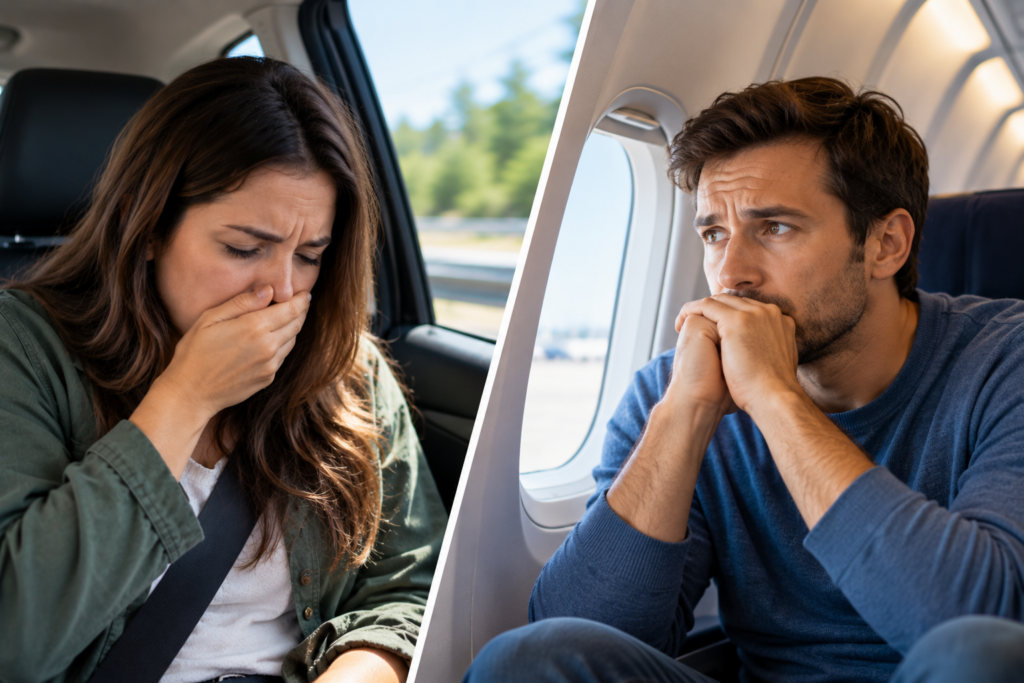
Travel should be something to look forward to, but for some people, getting into a car, boarding an airplane, or stepping onto a boat can bring uncomfortable symptoms. Nausea, dizziness, sweating, a racing heart, and general uneasiness can all make a trip less enjoyable. The challenge is that some of these symptoms can occur with both motion sickness and travel anxiety.
Although motion sickness and travel anxiety can sometimes feel similar, they aren’t the same thing. Motion sickness is primarily connected to how the brain processes movement and sensory information, while travel anxiety involves feelings of worry, nervousness, or fear associated with traveling. In some situations, a person may even experience both at the same time.
Understanding the difference can make it easier to recognize what may be contributing to your discomfort and determine how to prepare for your next trip.
What Causes Motion Sickness?
Motion sickness is generally associated with conflicting sensory signals about movement. Your brain receives information from your eyes, inner ear, muscles, and joints to determine where your body is and whether it is moving.
Problems can occur when those signals don’t match.
For example, imagine sitting in the back seat of a moving car while reading something on your phone. Your eyes are focused on a screen that appears stationary, but your inner ear detects the car accelerating, braking, and turning. This sensory mismatch can contribute to motion sickness.
Common symptoms can include nausea, dizziness, sweating, increased salivation, fatigue, headache, and vomiting. Symptoms often begin after exposure to movement and may become more noticeable during winding roads, turbulence, rough water, or other unpredictable motion.
What Is Travel Anxiety?
Travel anxiety is different because it isn’t primarily caused by movement. Instead, it involves nervousness, worry, or fear surrounding travel.
Someone might feel anxious about flying, driving in heavy traffic, getting lost, missing a connection, traveling somewhere unfamiliar, or simply being away from home. For some travelers, anxiety may begin hours or even days before the trip starts.
Travel anxiety can also produce physical symptoms. A person might experience an upset stomach, sweating, rapid breathing, a racing heartbeat, muscle tension, or difficulty concentrating. Because nausea and sweating can also occur with motion sickness, it isn’t always immediately obvious which issue is contributing to the discomfort.
Timing Can Provide an Important Clue
One way to think about the difference is to consider when your symptoms begin.
Motion sickness is typically connected to exposure to movement. You may feel perfectly fine before leaving home but begin feeling dizzy or nauseated once the car reaches winding roads or the boat starts rocking.
Travel anxiety may begin before any movement occurs. You might notice yourself becoming nervous while packing, driving to the airport, waiting to board a flight, or thinking about an upcoming trip.
This distinction isn’t perfect, but paying attention to timing can help you recognize patterns.
Specific Activities May Trigger Motion Sickness
Another useful clue is whether certain activities consistently make you feel worse.
Reading in the car, scrolling through a phone, sitting where you can’t see the direction of travel, or spending time below deck on a moving boat may increase motion sickness for some people. Looking toward the road or horizon and reducing screen use may make the experience more comfortable.
Someone dealing primarily with travel anxiety may not notice the same relationship between visual activities and symptoms. Instead, their discomfort may increase when thinking about a specific travel concern.
Understanding your personal triggers can help you prepare more effectively.
Can You Experience Both at the Same Time?
Yes. Motion sickness and travel anxiety don’t have to occur separately.
If you’ve experienced severe motion sickness during previous trips, you might begin worrying about becoming sick before your next trip even starts. That anticipation can make traveling stressful before you’ve gone anywhere.
Once the vehicle begins moving, actual motion sickness symptoms may then appear. This can create an unpleasant cycle in which worrying about motion sickness makes the overall travel experience more stressful, while experiencing motion sickness reinforces concerns about future trips.
Recognizing that two different factors may be involved can be helpful when deciding how to approach them.
Planning Ahead for Motion Sickness
If movement appears to be the primary trigger, several simple travel habits may help make your trip more comfortable.
Try looking toward the direction you’re traveling rather than focusing on a phone, book, or tablet. When possible and appropriate, choose a seat that provides a good view outside. Keeping your head relatively still, maintaining a comfortable temperature, avoiding strong odors, and getting fresh air when practical can also make the environment more pleasant.
If you’re traveling by car, taking occasional breaks can provide relief from continuous movement and give you an opportunity to stretch and get some fresh air.
Most importantly, if you already know you’re prone to motion sickness, consider preparing before the motion begins rather than waiting until you’re feeling uncomfortable.
Where Jet-Avert Fits Into Your Travel Routine
For travelers who experience motion sickness, Jet-Avert® provides an over-the-counter option for preventing and treating nausea, vomiting, or dizziness associated with motion sickness.
Jet-Avert contains meclizine HCl 25 mg. For adults and children 12 years and older, the product directions state that the first dose should be taken one hour before starting the activity. Always follow the complete Drug Facts label, including dosage instructions and warnings.
It’s important to recognize that a motion sickness medication is intended to address symptoms associated with motion sickness. It isn’t a treatment for anxiety. If anxiety is the primary reason travel is difficult, or if anxiety regularly interferes with everyday activities, consider discussing those concerns with a qualified healthcare professional.
Learn What Your Body Is Telling You
Motion sickness and travel anxiety can share some symptoms, but their underlying triggers are different. Motion sickness is associated with movement and conflicting sensory signals, while travel anxiety is connected to worry or fear surrounding travel.
Paying attention to when your symptoms begin, what makes them worse, and what makes them improve can help you better understand your travel experience.
If motion is the problem, preparing ahead can make a meaningful difference. Choose a comfortable seat when possible, look outside instead of down at a screen, keep the environment cool and fresh, and plan breaks during longer trips.
For those prone to motion sickness, having Jet-Avert® available can also be part of preparing before the journey begins. Follow the Drug Facts label carefully, and speak with a healthcare professional if symptoms are severe, persistent, new, or difficult to distinguish from another condition.
Whether you’re headed across town or across the country, understanding what’s behind your discomfort is an important first step toward making travel feel more manageable.
Share This
Archives
- September 2026
- August 2026
- July 2026
- June 2026
- May 2026
- April 2026
- March 2026
- February 2026
- January 2026
- December 2025
- November 2025
- October 2025
- September 2025
- August 2025
- July 2025
- June 2025
- May 2025
- April 2025
- March 2025
- April 2023
- March 2023
- February 2023
- January 2023
- December 2022
- November 2022
- October 2022
- September 2022
- August 2022
- July 2022
- June 2022
- May 2022
- April 2022
- March 2022
- February 2022
- January 2022
- December 2021
- November 2021
- October 2021
- September 2021
- July 2021



